

LPTH-1 SITE-LOG Thermistor and Temperature Data Logger

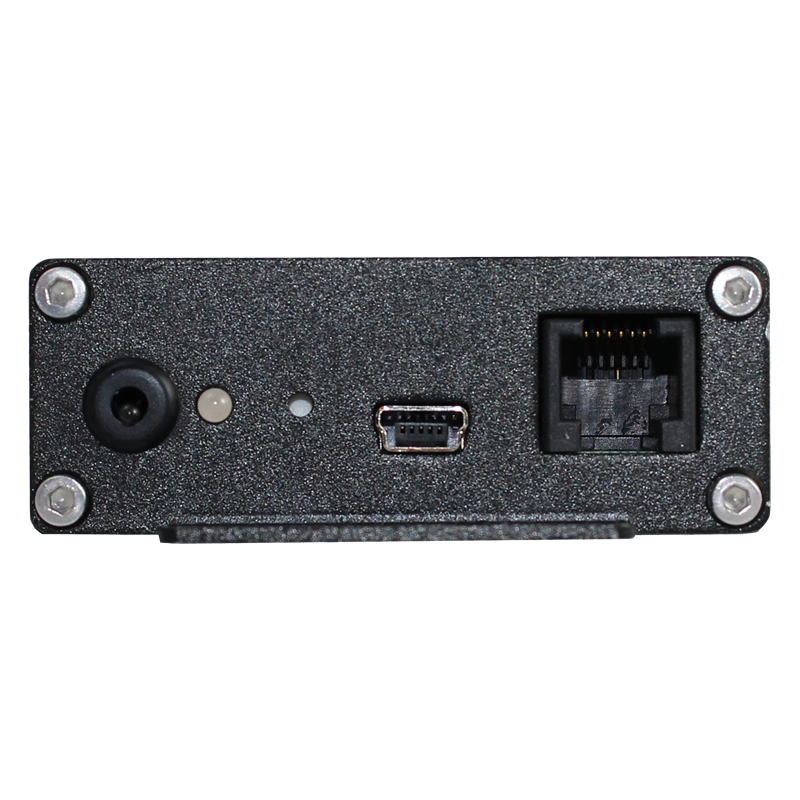
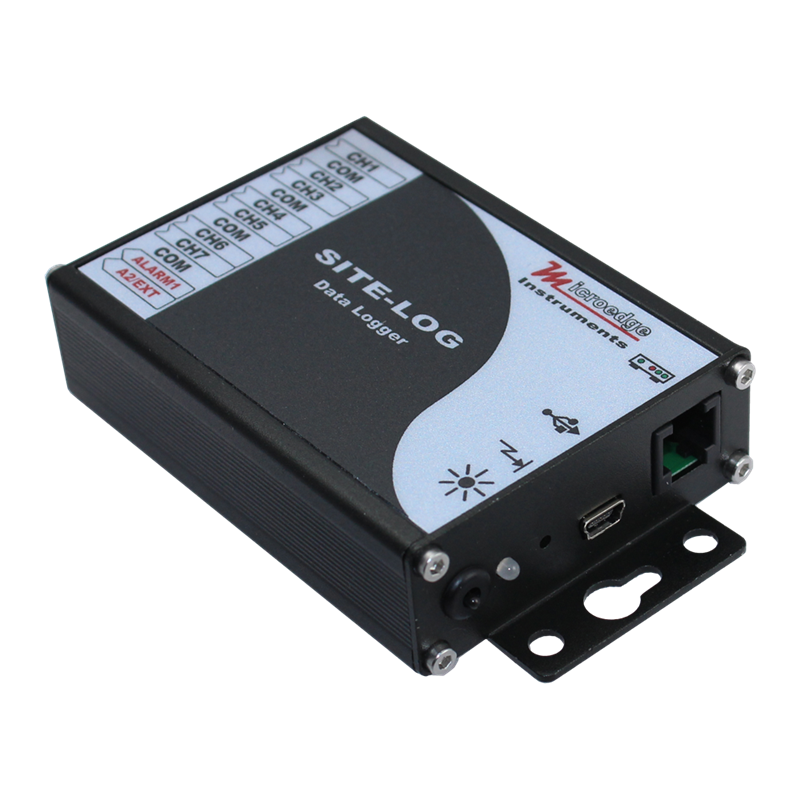
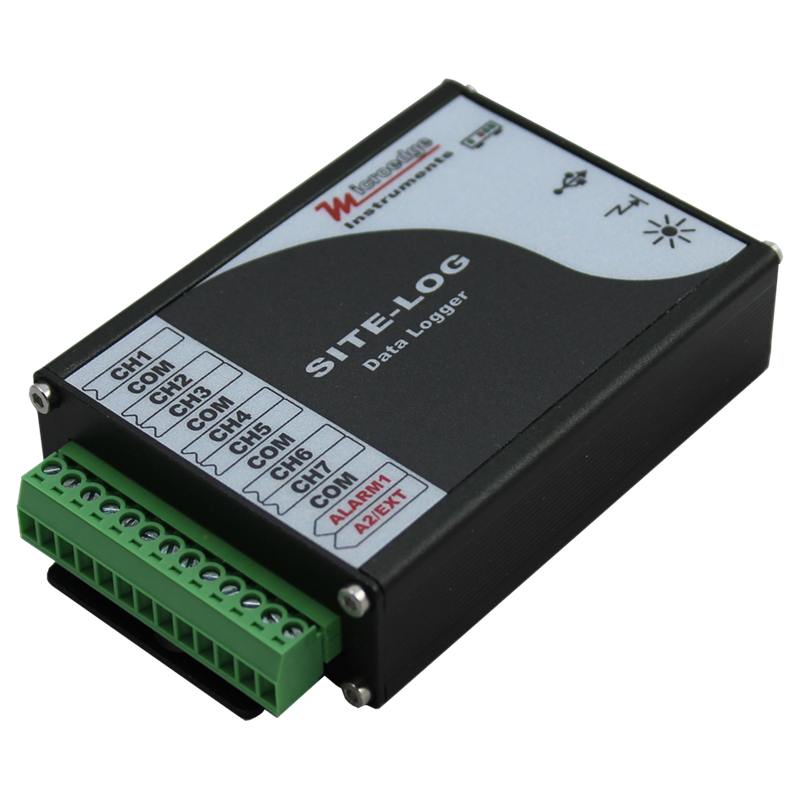
The LPTH-1 SITE-LOG is a rugged 7-channel thermistor data logger designed for multi-point temperature and resistance monitoring in industrial, laboratory, research, testing, and environmental applications.
It provides seven external thermistor/resistance input channels plus one built-in temperature channel for ambient temperature monitoring. The LPTH-1 is particularly well suited for 10 kΩ NTC thermistors, while SiteView equations allow the logger to support other compatible thermistor and resistance measurement applications.
The LPTH-1 is a battery-powered, standalone logger with 8 MB of non-volatile flash memory, allowing measurements to be recorded in the field and downloaded later through USB. Its rugged aluminum enclosure and conformal-coated PCB provide additional protection for long-term use in demanding environments.
Multi-Channel Thermistor and Resistance Measurement
The LPTH-1 provides seven external channels for connecting thermistors or resistive sensors.
It can be used for applications such as:
Multi-point temperature monitoring
10 kΩ NTC thermistor measurement
Resistance measurement
Laboratory temperature testing
Equipment and process monitoring
Environmental temperature monitoring
For thermistor applications, SiteView converts the measured resistance into temperature using the selected thermistor equation.
Users can enter known thermistor coefficients or calculate them from temperature-resistance data points.
High-Resolution Data Logging
The LPTH-1 uses a 16-bit analog-to-digital converter for high-resolution measurements.
Sampling intervals are programmable from:
20 milliseconds to 12 hours
This allows the same logger to be used for both fast testing and long-term monitoring.
For sampling intervals below one second, external power is required.
Standalone Operation and Long-Term Recording
Recorded data is stored in 8 MB of onboard non-volatile flash memory and retained even when external power is removed.
Depending on the sampling interval and number of enabled channels, the logger can record from hours to years of data.
The logger supports:
Stop logging when memory is full
FIFO logging mode
Immediate logging
Delayed start
Field push-button activation
With a 1-minute sampling interval, the internal battery can provide up to 10 years of operation, depending on usage and operating conditions.
USB Communication and SiteView Software
The LPTH-1 connects directly to a computer through USB.
SiteView software provides the tools required to:
Configure logging sessions
Configure thermistor equations
Download recorded data
View real-time readings
Display data in graph and table formats
Configure alarms
Apply custom equations and engineering-unit conversions
Export and analyze recorded data
SiteView is sold separately.
Alarm and Excitation Control
The LPTH-1 provides configurable alarm and control functions for applications requiring more than basic data recording.
Each channel supports two programmable alarm thresholds.
The available output terminals can be configured for:
Alarm output
Excitation control
The onboard status LED provides visual indication of normal sampling, alarm conditions, and low battery status.
Remote Access and Network Integration
Although the LPTH-1 is a USB-based data logger, it can also be accessed remotely over an Ethernet network by connecting it to a Microedge Smart-Hub.
Smart-Hub allows the LPTH-1 to be accessed through:
SiteView
SiteView-Web
SiteView SDK
Pluto
Smart-Hub also provides:
RESTful Web API
Modbus TCP Gateway
This allows LPTH-1 thermistor and resistance measurements to be integrated with third-party software, PLCs, HMIs, SCADA systems, and other industrial monitoring platforms.
Rugged Industrial Design
The LPTH-1 is housed in a durable aluminum enclosure.
Its circuit board is protected with conformal coating to help resist:
Moisture
Corrosion
Mildew
The logger is designed for operation in environments from:
-40°C to +70°C (-40°F to +158°F)
with up to:
95% RH, non-condensing
Key Features
7 external thermistor/resistance input channels
1 built-in temperature channel
Optimized for 10 kΩ NTC thermistors
16-bit analog-to-digital converter
8 MB non-volatile flash memory
20 ms to 12 hr programmable sampling interval
USB communication
AUX TTL-level serial communication
Programmable alarm thresholds
Alarm output and excitation control
Stop or FIFO logging mode
Immediate, delayed, or push-button logging activation
Up to 10 years of battery life at a 1-minute sampling interval
Rugged aluminum enclosure
Conformal-coated PCB
SiteView software support
Remote Ethernet access through Smart-Hub
RESTful Web API and Modbus TCP integration through Smart-Hub
Typical Applications
The LPTH-1 is suitable for:
Multi-point temperature monitoring
Thermistor sensor testing
Laboratory research
Environmental monitoring
Industrial equipment monitoring
Process temperature monitoring
Product testing and validation
Long-term temperature recording
Resistance measurement
Documents:
SITE-LOG Thermistor Data Logger (LPTH-1) Specifications
| General | |
|---|---|
| Product Name | SITE-LOG Thermistor Data Logger |
| Model | LPTH-1 |
| Inputs | |
| Connection | Plugable terminal block for seven external channels, alarm outputs |
| Channels | One on-board thermistor temperature (-40°C ~ 70°C, -40°F ~ 158°F) Seven external thermistors/resistors |
| Resolution | 0.0018% |
| Accuracy | +/- 0.2°C (0°C ~ 70°C, 32°F ~ 158°F) ( for 10K NTC thermistor, does not include thermistor probe error) |
| Alarms | |
| Channel Alarms | Two editable alarm thresholds per channel. |
| Alarm Output | ALARM1 & A2/E terminal strips can be configured as alarm outputs. Alarm-On: MOSFET(N-Channel) switch on Alarm-Off: MOSFET(N-Channel) switch off Max Power: 200mA @ 24VDC |
| Alarm-On Delay | Programmable 0 - 10 minutes delay with 1-minute increment. |
| Alarm Indicator | On-board LED becomes red when in alarm condition. |
| On-board Memory | |
| Size | 8 Mega bytes (4MB readings). |
| Data Retention | Over 20 years. |
| Sampling | |
| Sampling Interval | 20 milliseconds to 12 hours programmable. (external power supply required if interval less than one second) |
| Logging Mode | Stop recording or FIFO when memory is full. |
| Logging Activation | Programmable instant, start delay or field push button activation. |
| Communications | |
| Interface | USB (Mini-USB-B) (USB-A-mini USB-B Cable included) AUX(RJ11) for TTL level RS232 communications. |
| Baud Rate | Auto-detect baud rate from 2400 to 115200 bps on both USB and AUX. |
| Battery | |
| Power | Built-in 3.6V Lithium Battery. |
| Battery Life | 10 years based on 1 minute sampling interval. |
| Software | |
| SiteView (Sold separately) | Configuration, downloading, plotting, real-time view, custom calibration and custom equation. |
| Software Requirement | Computer with 1.0 GHz or faster processor 1 GB Memory or higher 10 GB of available hard-drive space or higher Windows XP with SP2 or later, Vista, Window 7,8,10 At least one USB port or one COM port. |
| Physical | |
| Material | Aluminum enclosure. |
| PCB Treatment | Conformal coating. |
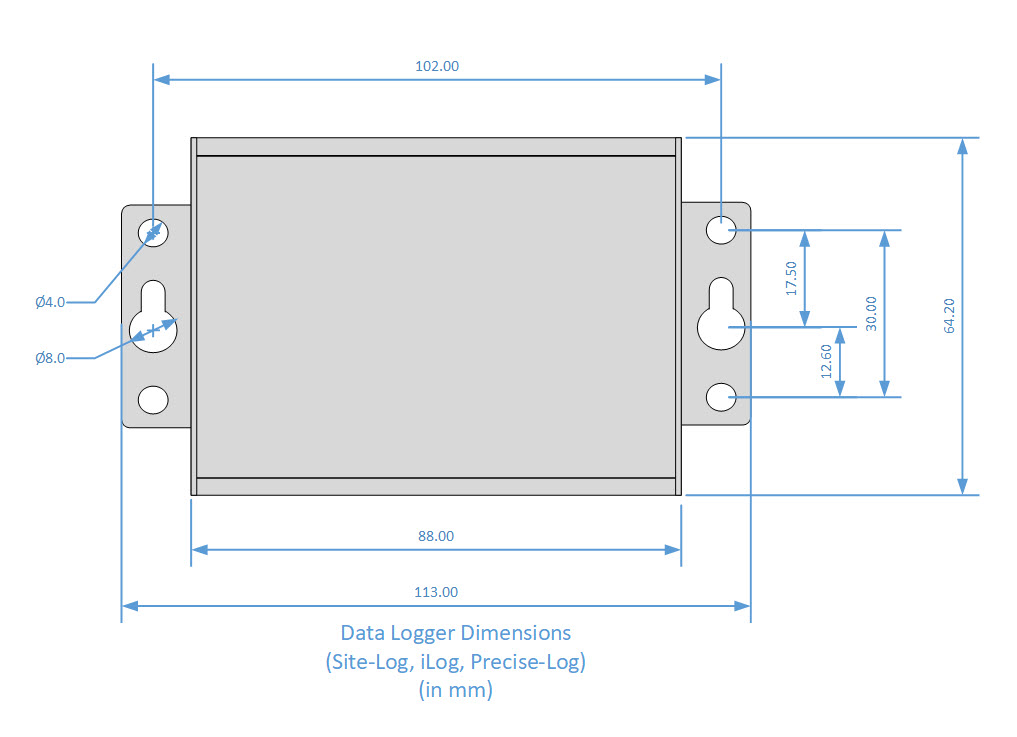
| Dimension | 88 X 64.2 X 24 mm (3.46 X 2.53 X 0.95 inches). |
| Weight | 200g |
| Mounting | Probe/wall-mount holes for hanging/mounting. |
| Others | |
| LED Indicator | Tri-Color LED: (can be disabled for power saving) Normal Sampling: light green when sampling. Alarm: red when sampling. Low Battery: amber when sampling. |
| Excitation Control | A2/E terminal strip can be configured as excitation control output for driving the power of connected devices. Warm-up delay interval settings: 10 to 240 seconds with 10-second increment. |
| Operating Environment | -40 ~ +70 °C (-40 °F ~ 158 °F), 0 ~ 95% RH non-condensing. |
| Clock Accuracy | ±1 mintue per month. |
| Approval | CE, FCC |
Logger Memory Capacity
| Sampling Interval | Enabled Channel | Logging Capacity |
|---|---|---|
| 1 minute | 1 | 8 years |
| 1 minute | 2 | 4 years |
| 1 minute | 8 | 1 year |
| 10 seconds | 1 | 485 days |
| 10 seconds | 2 | 242 days |
| 10 seconds | 8 | 60 days |
| 1 second | 1 | 48 days |
| 1 second | 2 | 24 days |
| 1 second | 8 | 6 days |
| 100 milliseconds | 1 | 4 days |
| 100 milliseconds | 2 | 2 days |
| 100 milliseconds | 8 | 14.4 hours |
Resources:
PL-HW PRECISE-LOG Thermistor Data Logger
PL-HW is an 8-channel, battery powered, standalone and WIFI-enabled thermistor data logger. The logg..
iTH-10 iLOG Thermistor and Temperature Data Logger
iLog Thermistor Data Logger is low cost, high accuracy, battery powered, stand-alone external thermi..
LRTD SITE-LOG Resistance Temperature Detector Data Logger
The SITE-LOG LRTD is a 4-channel, battery powered, standalone RTD data logger. The logger records th..
PL-H PRECISE-LOG Thermistor Data Logger
PL-H is an 8-channel, battery powered, standalone thermistor data logger. The logger records eight e..