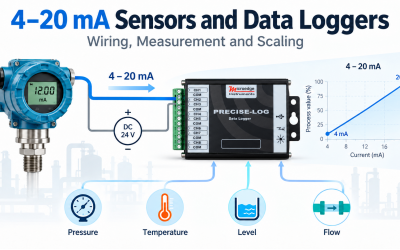
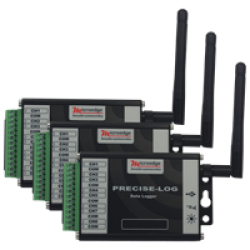
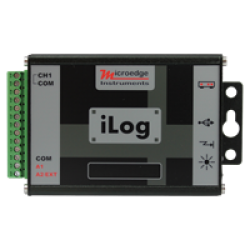
The 4–20 mA current loop is one of the most widely used signal standards in industrial measurement and process monitoring. Pressure, temperature, level, flow, humidity, and many other transmitters commonly provide a 4–20 mA output that can be recorded by a data logger or read by a control system.This Technical Note explains how a 4–20 mA signal works, how it is connected to a data logger, and how the measured current can be converted into meaningful engineering units. 1. What Is a 4–20 mA Signal? A 4–20 mA transmitter converts a physical measurement into an electrical current.Typically:4 mA represents the minimum measurement20 mA represents the maximum measurementFor example, a pressure transmitter with a range of 0–100 PSI may produce:CurrentPressure4 mA0 PSI8 mA25 PSI12 mA50 PSI16 mA75 PSI20 mA100 PSIUnlike a voltage signal, a current-loop signal is generally less affected by voltage drop in long cables, making 4–20 mA widely used in industrial environments.The 4 mA lower limit also provides a useful distinction between a valid minimum reading and certain fault conditions such as an open circuit. 2. Typical 4–20 mA Measurement System A basic 4–20 mA measurement system includes:...